
Introduction
The baby monitor market has evolved dramatically over the past few years. No longer just simple audio devices, modern baby monitors now incorporate AI, health tracking, and IoT connectivity. For parents, staying updated on the latest trends is essential not only for safety but also for choosing devices that enhance parenting efficiency.
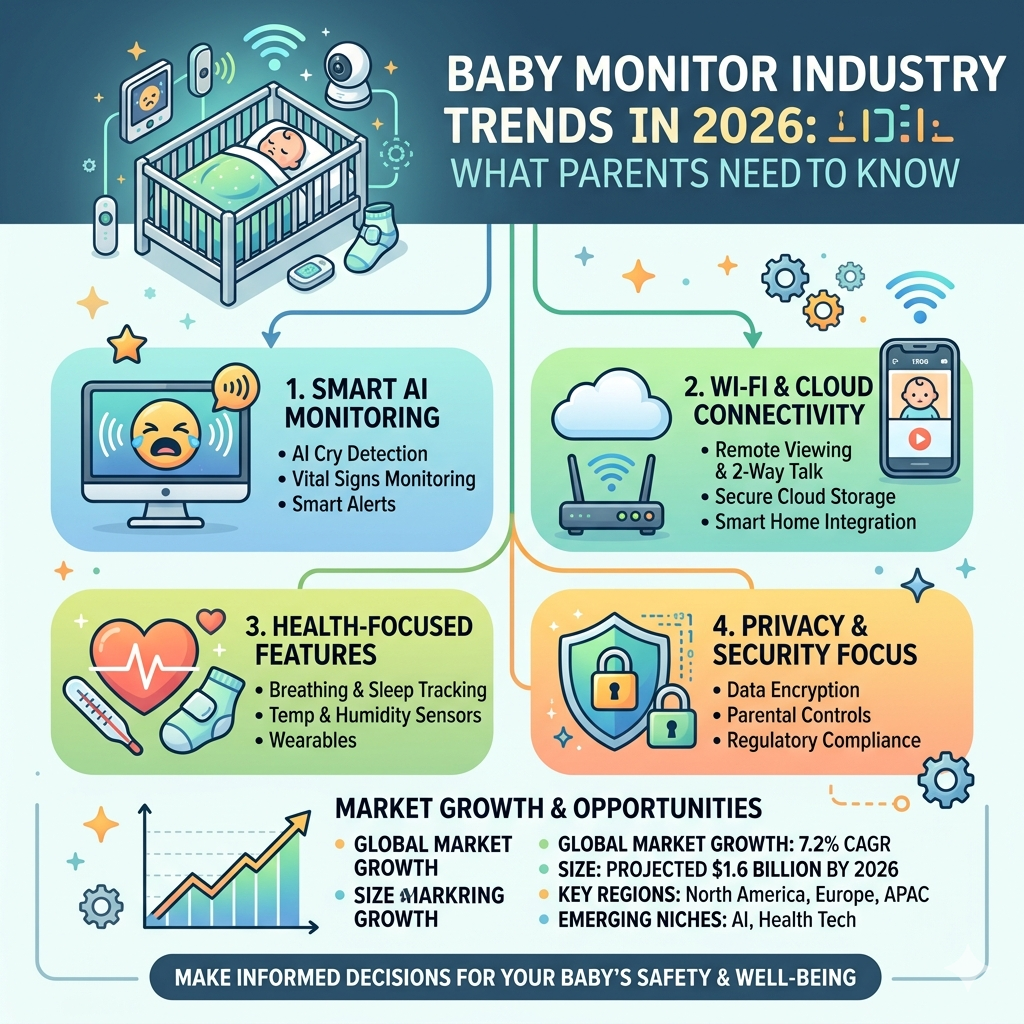
According to recent market analysis, the global baby monitor market is expected to grow at a CAGR of 7.2% from 2024 to 2026, driven by increased adoption of smart home technologies and rising awareness of infant safety.
Smart Baby Monitors Are Taking Over
Traditional audio-only monitors are gradually being replaced by smart monitors with advanced features:
AI Cry Detection: Automatically alerts parents when a baby is crying, differentiating between different types of cries.
Vital Signs Monitoring: Tracks heart rate, breathing patterns, and sleep cycles.
Smart Alerts: Integration with smartphones allows parents to receive real-time notifications anywhere.
Google Trends shows a steady rise in searches for “AI baby monitor” and “smart baby monitor” over the past 12 months, indicating growing consumer interest in intelligent monitoring solutions.
WiFi-Enabled and Cloud-Connected Devices
Connectivity has become a major trend in 2026:
WiFi Baby Monitors: Enable remote viewing and two-way communication.
Cloud Storage: Video and data can be securely stored online for later review.
Integration with Smart Home Devices: Many monitors now work with Alexa, Google Home, or Apple HomeKit.
Parents are searching for “best WiFi baby monitor” and “cloud baby monitor reviews” more than ever, reflecting the demand for convenience and mobility.
Health-Focused Features Gain Traction
Modern parents are prioritizing infant Health Monitoring:
Breathing and Sleep Tracking: Detects irregular breathing or unusual sleep patterns.
Temperature and Humidity Sensors: Helps maintain a safe and comfortable nursery environment.
Wearable Monitors: Some brands offer smart socks or bands that track real-time health data.
According to Statista, searches for “Baby Breathing Monitor” have grown by over 35% in the last two years, showing rising awareness and demand for health-focused devices.
Privacy and Security Concerns
With increased connectivity comes increased risk:
Data Encryption: Modern devices are incorporating end-to-end encryption to protect baby videos and health data.
Parental Controls: Allow restricting access to multiple users or controlling remote access.
Regulatory Compliance: Devices are following stricter regulations around data privacy, especially in the EU and US.
Google search trends reveal a spike in queries for “Secure Baby Monitor” and “baby monitor privacy”, highlighting parental concerns about cybersecurity.
Market Growth and Opportunities
Global Market Size: Projected to reach $1.6 billion by 2026.
Key Growth Regions: North America and Europe remain dominant, but APAC shows rapid adoption due to urbanization and rising disposable incomes.
Emerging Niches: AI monitoring, health tracking, and smart home integration represent high-growth opportunities for manufacturers.
Conclusion
The baby monitor industry in 2026 is more innovative and competitive than ever. Parents are no longer satisfied with basic audio devices—they want smart, connected, and health-focused monitors. For manufacturers, focusing on AI, connectivity, and security is crucial to stay ahead.
By following these trends, parents can make informed decisions while companies can seize new opportunities in this rapidly evolving market.