
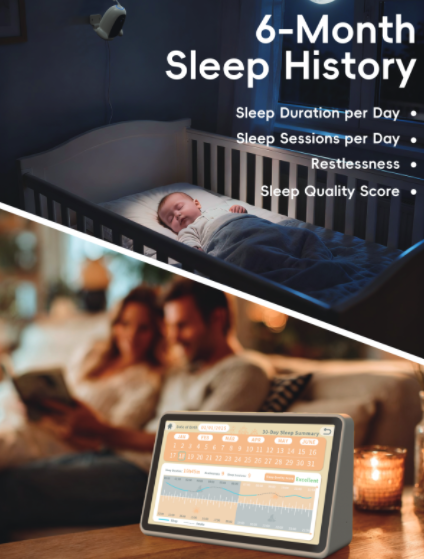
In 2026, the baby monitor industry is undergoing a major transformation. What was once a simple audio device has now evolved into a data-driven, AI-powered parenting system.


With the global baby monitor market expected to grow steadily from $1.57 billion in 2026 to over $2.6 billion by 2035 , and smart monitors growing even faster, this category is becoming one of the most important segments in smart home and baby tech.


If you’re a parent, retailer, or eCommerce seller, understanding the latest baby monitor trends in 2026 is critical.

🚀 1. AI Baby Monitors Are Dominating the Market

The biggest shift in 2026 is clear:
👉 AI-powered baby monitors are no longer optional—they are becoming the standard


Modern devices now offer:

Cry detection & classification

Movement and rollover alerts

Sleep pattern analysis

Predictive risk alerts


In fact, around 68% of new parents now prefer smart monitoring solutions over traditional monitors .

Even more importantly, AI integration is accelerating rapidly, with continuous improvements in predictive accuracy and reduced false alarms .

🧠 2. From Monitoring → “Baby Data Intelligence”

In 2026, baby monitors are no longer just cameras—they are becoming baby data platforms.

New capabilities include:


  • Sleep analytics dashboards
  • Development tracking
  • Behavior insights
  • Personalized parenting suggestions

This aligns with the broader trend of AI-driven childcare solutions, where parents expect real-time insights, not just alerts .

❤️ 3. Health Monitoring Is the New Core Feature

One of the fastest-growing segments is baby health monitoring.

New-generation devices now track:


  • Breathing rate
  • Heart rate (wearables or radar tech)
  • Oxygen levels
  • Sleep quality


This trend is driven by increasing parental focus on infant safety and early health detection .

🔐 4. Privacy & Security Are Now a Buying Decision Driver

In 2026, parents are more concerned than ever about data security.

Key trends:


  • Rising demand for non-WiFi baby monitors
  • End-to-end encryption
  • Local data storage (edge computing)
  • “hack-proof baby monitor” searches increasing


Even major review platforms now emphasize choosing monitors that do not compromise privacy for convenience .

📡 5. Smart Home Integration Is Becoming Standard

Baby monitors are now part of a connected smart home ecosystem.

Integration examples:

  • Sync with smart speakers
  • Connect to home security systems
  • Multi-device alerts (camera + phone + display)

This trend is fueled by the rapid adoption of smart homes and connected devices globally .

📊 6. Multi-Camera & Whole-Room Monitoring

Modern parents want full visibility, not just crib-level monitoring.

Trending features:

  • Multi-camera support
  • Split-screen viewing
  • Room coverage with pan/tilt/zoom
  • AI auto-tracking

This is especially important for:

  • Families with multiple children
  • Larger homes

📈 7. Market Opportunity (For Sellers & Brands)

From a business perspective, 2026 is a high-growth window:

  • Smart baby monitor market growing at 8%–12% CAGR
  • AI baby monitor segment growing even faster (~20%+)
  • North America remains the largest market (~40% share)

🛒 How to Choose the Best Baby Monitor in 2026

If you’re buying or sourcing products, focus on:


✔ AI detection (cry / motion / sleep)
✔ Health tracking (breathing / sleep)
✔ Privacy protection (non-WiFi or encrypted)
✔ App experience (stable + user-friendly)
✔ Expandability (multi-camera support)

🔮 Final Thoughts

In 2026, the baby monitor industry is shifting toward:


👉 AI-driven intelligence
👉 health-focused monitoring
👉 privacy-first design


The future is no longer about just watching your baby—it’s about understanding, predicting, and protecting.

Scroll to Top