
Introduction: The Evolution of Baby Monitoring Technology
For decades, baby monitors have helped parents stay connected with their little ones. From basic audio devices to advanced smart cameras, baby monitoring technology has changed dramatically.
Today smart baby monitors are no longer just tools for listening to a baby sounds. They combine HD video, artificial intelligence, mobile connectivity, and intelligent sensors to provide parents with safer, smarter, and more convenient childcare solutions.
As modern parents look for better ways to balance daily life and childcare, AI-powered baby monitoring is becoming the next major trend in parenting technology.
The Evolution of Baby Monitors: From Audio to Video
Traditional Audio Baby Monitors
The earliest baby monitors mainly focused on sound transmission. Parents could hear when their baby cried, but they could not see what was happening.
Limitations included:
- No visual confirmation
- Difficulty understanding baby movements
- Limited monitoring information
The Rise of Video Baby Monitors
With camera technology development, video baby monitors became popular among families.
Modern video monitors allow parents to:
- Watch babies in real time
- Check sleeping conditions
- Monitor nursery activities
- Reduce unnecessary interruptions
HD cameras and infrared night vision have made 24/7 monitoring possible.
Smart Baby Monitors: More Than Just a Camera
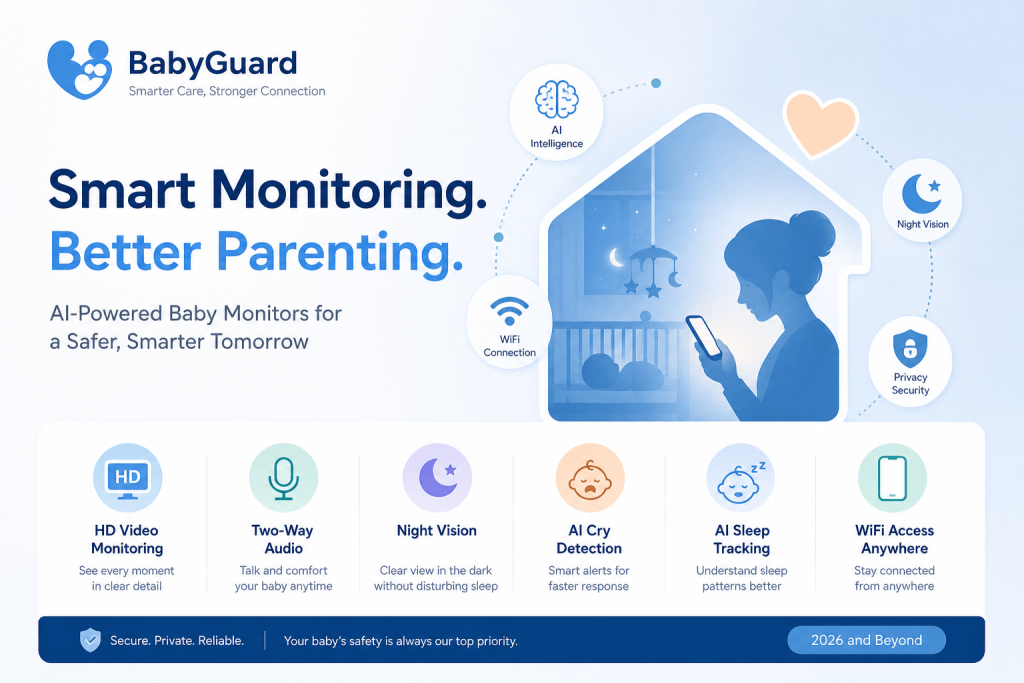
Today smart baby monitors combine multiple technologies to create a complete parenting assistant.
Key features include:
HD Video Monitoring
High-resolution cameras provide clearer images, allowing parents to easily check their baby:
- Sleeping position
- Facial expressions
- Daily activities
Two-Way Audio Communication
Built-in microphones and speakers allow parents to talk with their babies remotely.
Parents can:
- Comfort a crying baby
- Talk from another room
- Create a sense of connection
Night Vision Technology
A baby monitor with night vision uses infrared technology to provide clear images in darkness without disturbing sleep.
AI-Powered Baby Monitoring: The Next Generation of Childcare
Artificial intelligence is transforming baby monitors from simple observation tools into intelligent childcare assistants.
AI Cry Detection
Advanced AI algorithms can recognize different sounds, including:
- Baby crying
- Sleeping noises
- Environmental sounds
This allows parents to respond faster when attention is needed.
AI Sleep Tracking
Future smart baby cameras can analyze:
- Sleep duration
- Wake-up frequency
- Sleeping patterns
Parents can better understand their baby routines and improve sleep quality.
Intelligent Motion Detection
AI-powered motion detection can identify:
- Baby movement
- Unusual activity
- Position changes
Smart alerts help parents stay informed without constantly checking the monitor.
WiFi Baby Monitors: Monitoring Anytime, Anywhere
The popularity of WiFi baby monitors has changed the way parents interact with childcare devices.
Through smartphone apps, parents can:
✔ Watch live video remotely
✔ Receive instant notifications
✔ Check recordings
✔ Share access with family members
Whether parents are working, traveling, or simply in another room, WiFi technology keeps them connected.
Privacy and Security: The Future Challenge of Smart Baby Cameras
As baby monitors become smarter and more connected, security becomes increasingly important.
Future smart baby monitors will focus on:
Encrypted data transmission
Secure cloud storage
Local privacy protection
Safer wireless connections
For parents, choosing a reliable and secure baby monitor is just as important as choosing advanced features.
Future Trends of Smart Baby Monitors in 2026 and Beyond
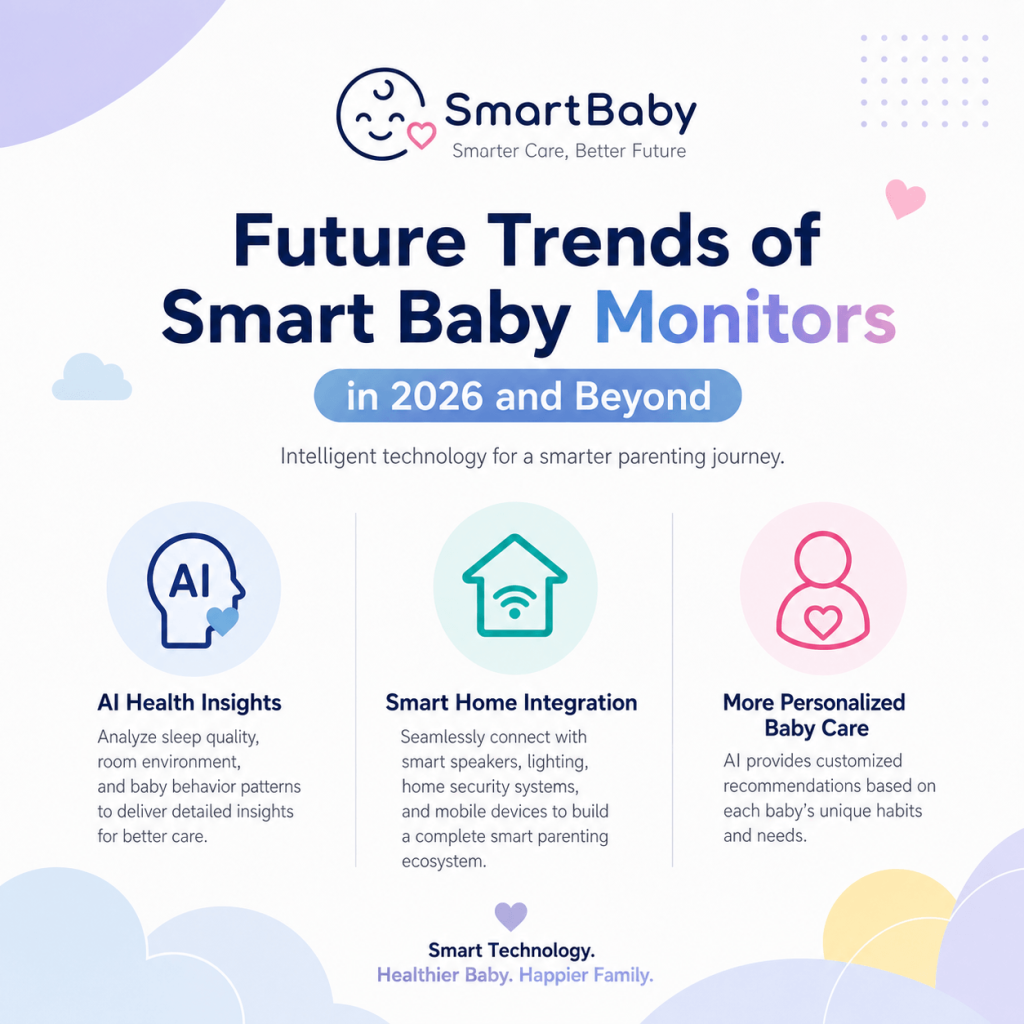
The future of baby monitoring will continue moving toward intelligent automation.
AI Health Insights
Future devices may analyze:
- Sleep quality
- Room environment
- Baby behavior patterns
Providing parents with more detailed childcare insights.
Smart Home Integration
Baby monitors will increasingly connect with:
- Smart speakers
- Smart lighting
- Home security systems
- Mobile devices
Creating a complete smart parenting ecosystem.
More Personalized Baby Care
AI technology will help provide customized recommendations based on each baby habits and needs.
How to Choose the Right Smart Baby Monitor?
When selecting a baby monitor, parents should consider:
1. Camera Quality
Choose HD resolution for clear monitoring.
2. Night Vision Capability
Ensure reliable nighttime viewing.
3. Connection Stability
WiFi or dedicated wireless connections should provide stable performance.
4. Smart Features
Look for:
- Motion detection
- Two-way audio
- APP control
- AI alerts
5. Data Security
Choose products with reliable privacy protection.
Conclusion: The Future of Parenting Is Smarter
The baby monitor industry is moving from simple video observation toward intelligent AI-powered childcare.
With technologies like AI detection, smart alerts, HD video, and mobile connectivity, modern smart baby monitors help parents create a safer and more comfortable environment for their babies.
From video monitoring to AI care, the future of baby monitoring is not only about watching babies — it is about understanding them better.